The Quiet Craft Behind Good Tea
Posted by Starwest Botanicals on 01-23-2026
National Hot Tea Day landed on January twelfth, but the conversation started long before that. Kai had been reviewing sourcing notes and pointed out how often tea origins get flattened into a single word. Black. Green. Herbal. As if the place does not matter.
It does. It always has.
He continued to explain that tea is one of the few agricultural products where geography shows up immediately. Altitude changes leaf chemistry. Rainfall shifts aroma. Soil composition influences body and finish. Even sunlight exposure alters how leaves develop. The same tea plant can produce dramatically different results depending on where and how it is grown, which is why sourcing is never just about category. It is about context.
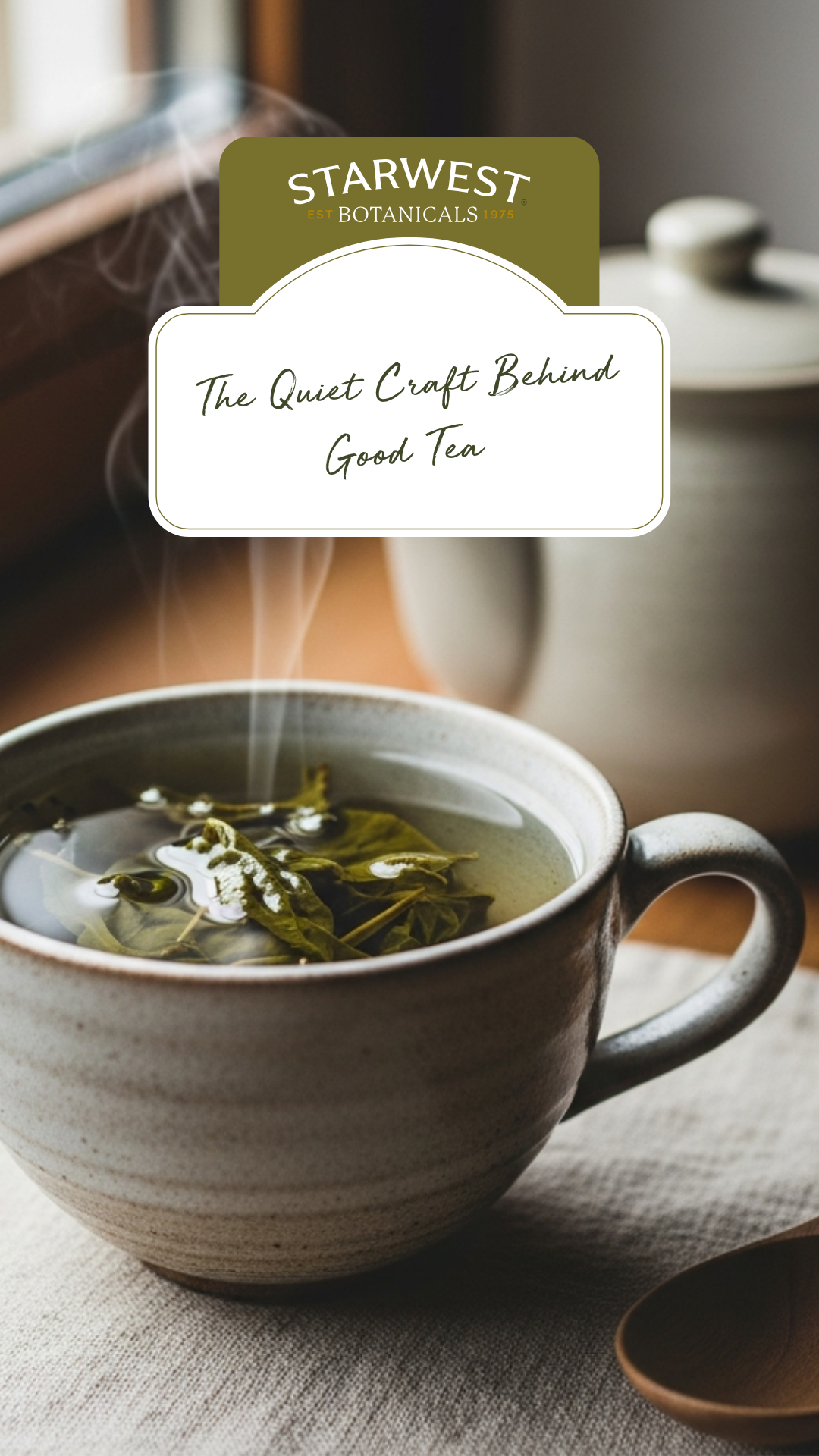
Many of the regions we source from rely on harvesting methods that have changed very little over generations. Leaves are picked at specific points in the season, often early in the day, when moisture levels and leaf structure are at their best. Processing happens close to harvest to protect freshness. Oxidation, drying, and rolling are controlled carefully, not for speed, but for integrity. Constance mentioned how even a slight shift in drying temperature can change the final cup from floral to flat.
We spent time talking about how tea travels after it leaves the field. From hillside gardens to initial sorting. Through quality testing that verifies purity and safety. Into blending rooms where consistency matters just as much as character. Aaron reminded us that sourcing tea is built on long-term relationships. You cannot rush trust. Farmers need predictability. Quality improves when partnerships last.
That patience shows up when you brew. Certain teas open slowly, releasing aroma in layers rather than all at once. Others carry weight and depth without sharpness. Tea does not overwhelm. It unfolds. That is part of why it has been used for centuries as a daily ritual rather than an occasional indulgence.
Beyond flavor, tea has long been appreciated for how it fits into routines. Many traditional cultures turned to tea for hydration, balance, and moments of pause throughout the day. Herbal teas in particular have been valued for their gentle nature, offering warmth, aroma, and comfort without intensity. The benefit is often in the ritual itself. Slowing down. Breathing in steam. Creating space.
National Hot Tea Day felt like a good reason to acknowledge that lineage. Not just the comfort of holding a warm mug, but everything behind it. Farmers working with real seasons. Careful handling that protects aroma and structure. Quality checks that ensure what reaches your cup is clean, consistent, and true to its origin. Long-term sourcing decisions that prioritize stability over trends.
Tea may feel simple, but its supply chain is anything but. It is one of the most nuanced categories we work with, balancing tradition, safety, and scale. That balance is something we take seriously.
Tea has stayed relevant for thousands of years for a reason. It meets people where they are. One cup at a time.

