Natural Egg Dyeing
Posted by Starwest Botanicals on 04-03-2026
It actually started with us saying, “Let’s do this again… but better.”
Last year was our first attempt… not perfect, but enough to try again. And judging by how many people watched along, we weren’t the only curious ones.
So this year, we came in a little more confident. Same setup: bowls, powders, too many spoons, but less guessing.
Bassma was already calling out which ones would work before we even started. Mattee was focused on getting the shots right. And somewhere in the background, there was still that quiet concern about turmeric ending up where it shouldn’t.
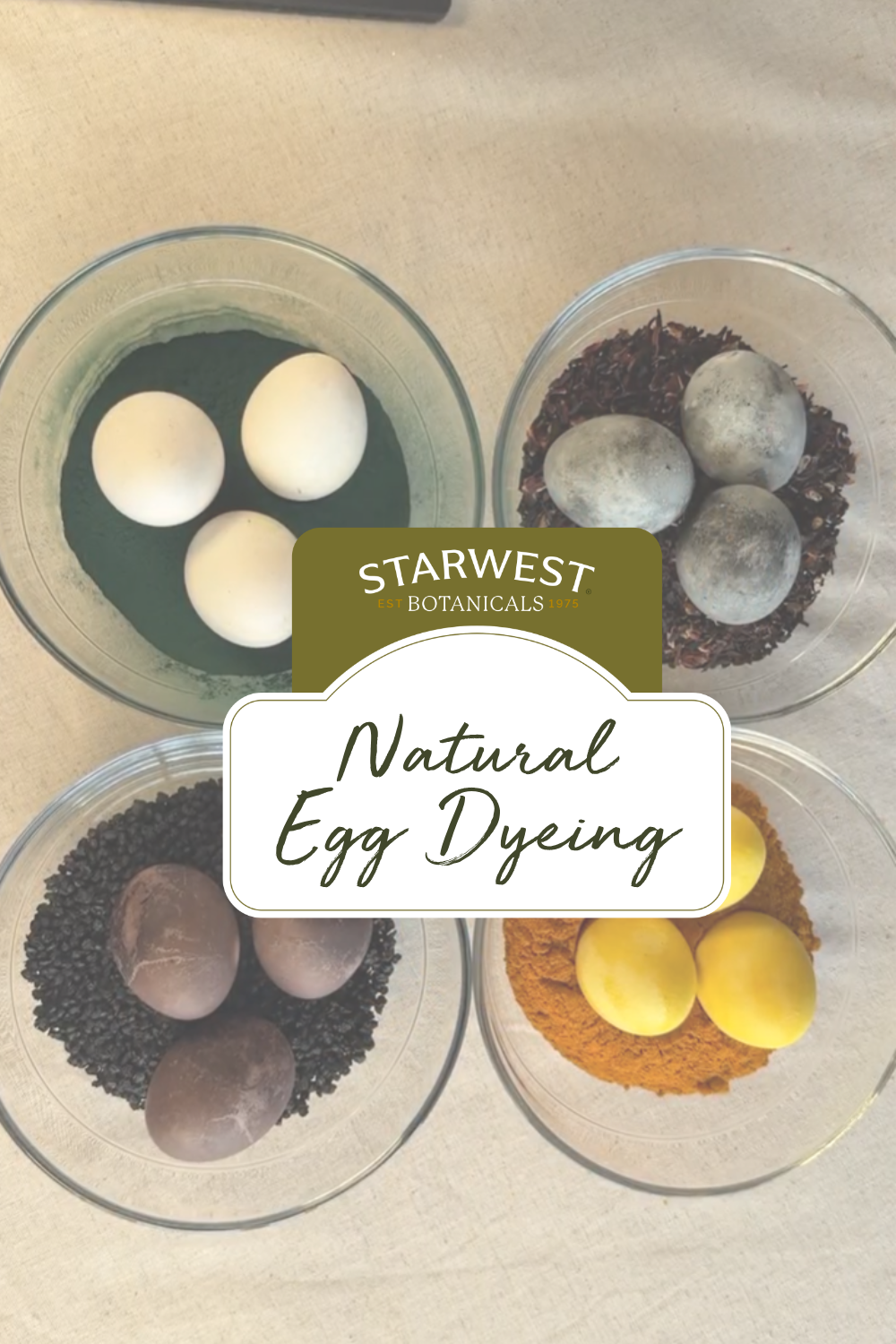
We kept our lineup tight: turmeric, hibiscus, elderberries, and spirulina. Ingredients we use all the time, just repurposed for something seasonal.
We kept the process simple across the board - simmer, strain, add a little vinegar, and let the eggs sit overnight.
And that’s where it got interesting.
Turmeric was the winner this year. Last year it gave us more of a soft, shy yellow, but this time the process really worked. It came out bold, bright, and we honestly couldn’t keep the lights off it. Turmeric was the star - no question.
Hibiscus did what it always does; it surprised us. The color deepened more than expected landing in those darker, moodier tones that shift depending on how long they sit. It’s never exactly the same twice, which is part of why we like it. Although, we will say… we preferred last year’s version. We didn’t strain the leaves then, so it created not just a beautiful color, but these natural patterns that made each egg feel a little more special.
Elderberry was an unexpected one this year. It gave us softer, more muted tones, but in a way that felt really intentional. Subtle, but still rich. We were genuinely surprised. It’s funny how these herbs, spices, and botanicals can still catch us off guard, even after working with them for so long.
And then spirulina… what can we say. Second year in a row, and it let us down.
It gave us that very light, pastel green again. Not bad in general, but when you look at the powder, that deep intense green, you expect something much stronger. Nope. Not spirulina. At this point, we’re not sure if we’ll try it again next year…
What you don’t see as much is the cleanup after. Because natural dyes don’t just stay in the bowl. Turmeric especially has a way of making itself known. A little spill here, a drip there, and suddenly your counter is part of the experiment too.
But that’s also where the nice part comes in. We figured out pretty quickly that the cleanup doesn’t need anything complicated. A bit of baking soda, a splash of lemon juice, let it sit for about 30 seconds while it fizzes, and then wipe it down. The acid helps break down the pigment, and the baking soda lifts it without damaging the surface.
Simple, and it works.
And it’s also a reminder of something we think about a lot beyond just this one project. The quality of the ingredient changes the outcome, even in something as simple as dyeing eggs. The depth of color, how evenly it takes, how it holds… all of that ties back to how the plant was grown, handled, and processed.
Filming projects like this always humbles us a little. It’s one thing to work with these ingredients every day, but it’s another to see how they actually perform in real time, what shows up, what doesn’t, what surprises you. It reinforces how much of a difference quality really makes.
We see this every day with our wholesale customers too. A lot of them aren’t using these ingredients for cooking at all. They’re making candles, soaps, bath products, incenses, and building entire experiences around them. In those cases, color, aroma, and consistency matter just as much, if not more.
That’s why sourcing isn’t just a step for us, it’s the foundation. From how ingredients are grown to how they’re cleaned, tested, and handled, every part of that process shows up in the final product, whether it’s in a recipe, a formulation, or even something as simple as an Easter egg.
By the end of it, we had a table full of naturally dyed eggs, a video we felt really good about, and a process that keeps getting better every year. Turmeric was the standout, hibiscus did its thing, elderberry quietly won people over, and spirulina… well, still a work in progress.
We’ll probably try again next year.
But that’s part of it. Working with real ingredients means you keep learning, adjusting, and seeing something new every time. And when the sourcing is right, the results speak for themselves, whether it’s a finished product, or something as simple as an egg on your kitchen counter.

