4 Ways to Use Cinnamon Sticks: Tea, Hot Chocolate, Apples, and Savory Cooking
Posted by Starwest Botanicals on 11-13-2026
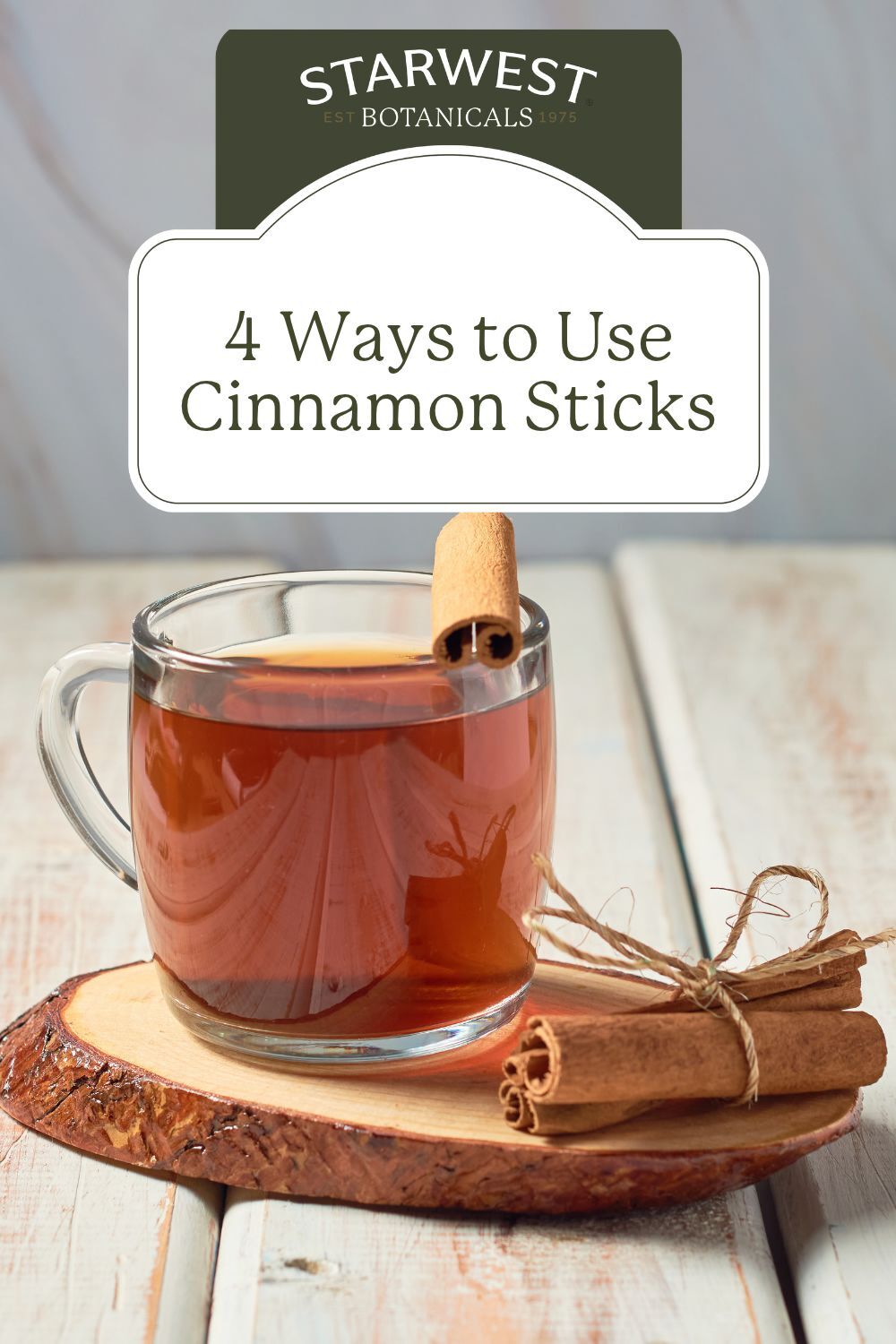
Cinnamon sticks can be used to infuse warm, aromatic flavor into tea, hot chocolate, cooked apples, and savory dishes. Simply simmer them in liquid or add them during cooking, then remove the sticks before serving.
Unlike ground cinnamon, which blends directly into recipes, whole cinnamon sticks release their flavor gradually. That makes them especially useful when you want cinnamon's aroma without adding powder to the finished dish.
Here are four easy ways to use them in your kitchen.
What Can You Make with Cinnamon Sticks?
Cinnamon sticks aren't just for holiday drinks. They work in sweet and savory recipes throughout the year.
|
Recipe |
How Cinnamon Is Used |
Flavor Pairing |
|
Cinnamon Stick Tea |
Simmered in water |
Honey, lemon, ginger |
|
Cinnamon Hot Chocolate |
Infused into warm milk |
Cocoa, vanilla |
|
Cinnamon-Simmered Apples |
Cooked with sliced apples |
Apple, maple, nutmeg |
|
Cinnamon-Spiced Rice |
Simmered with rice |
Cardamom, cloves, savory herbs |
Choosing your cinnamon: Starwest Organic Ceylon Cinnamon Sticks have a delicate, subtly sweet flavor that works well in beverages, fruit dishes, and savory cooking.
- How to Make Cinnamon Stick Tea
One of the simplest ways to use whole cinnamon is to simmer it in water. The result is a naturally caffeine-free cinnamon infusion with a warm, aromatic flavor.
Simple Cinnamon Stick Tea Recipe
Ingredients
- 1 Organic Ceylon Cinnamon Stick, approximately 5 inches
- 2 cups water
- Optional: honey or lemon, to taste
Instructions
- Add the cinnamon stick and water to a small saucepan.
- Bring the water to a gentle simmer.
- Cover and simmer for approximately 10–15 minutes.
- Remove from heat and allow to steep for another 5 minutes if you'd like a stronger flavor.
- Remove the cinnamon stick and pour into mugs.
- Add honey or lemon if desired.
Yield: Approximately 2 servings, depending on evaporation.
Preparation time: Approximately 15–20 minutes.
Recipe development note: Brewing time, flavor strength, and final yield should be confirmed through kitchen testing.
Flavor tip: For a brighter infusion, add a few slices of fresh ginger or a little lemon after brewing.
For more preparation ideas, explore our Complete Guide to Making Cinnamon Tea.
- Cinnamon Stick Hot Chocolate
Cinnamon and chocolate are a natural pairing. Infusing a cinnamon stick into warm milk adds a subtle spiced note without leaving visible cinnamon powder in your drink.
Cinnamon-Infused Hot Chocolate Recipe
Ingredients
- 2 cups milk or unsweetened plant-based milk
- 2 tablespoons Natural Cocoa Powder Organic
- 1–2 tablespoons sugar or maple syrup, to taste
- ¼ teaspoon Vanilla Flavor Extract Organic
Instructions
- Add the milk and cinnamon stick to a small saucepan.
- Warm over low to medium-low heat for approximately 8–10 minutes, stirring occasionally. Avoid boiling.
- Remove the cinnamon stick.
- Whisk in cocoa powder and sweetener until smooth.
- Stir in vanilla and serve warm.
Yield: Approximately 2 servings.
Tip: For a richer flavor, use a combination of milk and a small amount of melted chocolate.
- Cinnamon-Simmered Apples
Cinnamon sticks are ideal for cooked fruit because they add aroma while the fruit softens.
These cinnamon-simmered apples can be served over oatmeal, pancakes, yogurt, or vanilla ice cream.
Easy Cinnamon-Simmered Apples Recipe
Ingredients
- 2 medium apples, cored and sliced
- ½ cup water or apple juice
- 1 tablespoon maple syrup, optional
- 1 teaspoon lemon juice
Instructions
- Add the apples, cinnamon stick, and water or apple juice to a small saucepan.
- Cover and cook over medium-low heat for approximately 10–15 minutes, stirring occasionally.
- Add more liquid if needed to prevent sticking.
- Once the apples are tender, stir in maple syrup and lemon juice.
- Remove the cinnamon stick before serving.
Yield: Approximately 2–3 servings.
Try it: Spoon the warm apples over oatmeal for breakfast or serve alongside your favorite holiday dessert.
- Cinnamon-Spiced Savory Rice
Cinnamon isn't limited to sweet recipes. In many culinary traditions, whole cinnamon is used to add aromatic depth to rice dishes, stews, and braised vegetables.
The key is using a small amount so the cinnamon complements the other ingredients rather than dominating them.
Simple Cinnamon-Spiced Rice Recipe
Ingredients
- 1 cup uncooked basmati rice
- 1¾ cups water, or the amount recommended for your rice
- 1 small cinnamon stick organic or a portion of a larger stick
- 1 tablespoon olive oil
- ¼ teaspoon salt, or to taste
- Optional: 2 lightly crushed cardamom pods
Instructions
- Rinse the rice according to package instructions.
- Add the rice, water, cinnamon stick, olive oil, salt, and optional cardamom to a saucepan.
- Bring to a boil, then cover and reduce to low heat.
- Cook according to the rice package directions until the liquid is absorbed and the rice is tender.
- Remove from heat and let stand, covered, for approximately 5 minutes.
- Remove the cinnamon stick and cardamom pods, if used, before fluffing and serving.
Yield: Approximately 3 cups cooked rice, depending on the rice variety.
Serving idea: Pair with roasted vegetables, lentils, or your favorite savory main dish.
Ceylon vs. Cassia Cinnamon: Which Should You Use?
Two common types of culinary cinnamon are Ceylon and cassia.
|
Cinnamon Type |
General Flavor Profile |
Common Culinary Uses |
|
Ceylon Cinnamon |
Delicate, mildly sweet, layered |
Tea, hot chocolate, baked fruit, lighter savory dishes |
|
Cassia Cinnamon |
Bolder, more intense, warming |
Baking, strongly spiced beverages, robust savory dishes |
Both can be used in cooking, but their flavors and physical characteristics differ.
Ceylon cinnamon sticks are typically made of multiple thin layers of bark, while common cassia sticks are often thicker and harder.
For a closer comparison, read Ceylon Cinnamon vs. Cassia Cinnamon.
Whole vs. Ground Cinnamon: When to Use Each
Choose whole cinnamon sticks when you want to infuse flavor into a liquid or a dish that simmers.
Choose ground cinnamon when you want cinnamon distributed throughout a recipe, such as a cake batter, spice rub, or pie filling.
For recipes that call for ground cinnamon, Starwest Organic Ceylon Cinnamon Powder is a convenient option.
Whole sticks and ground cinnamon aren't always interchangeable in equal amounts. Follow your recipe's guidance when substituting.
How to Store Cinnamon Sticks
Store cinnamon sticks in an airtight container in a cool, dry place away from direct sunlight, heat, and moisture.
Whole spices generally retain their aroma longer than ground spices, but flavor can fade over time.
Before cooking, check that your cinnamon still has a pleasant, recognizable aroma.
Frequently Asked Questions
Can you put a cinnamon stick directly into tea?
Yes. You can simmer a cinnamon stick in water to make cinnamon tea or add it while brewing another tea. Remove the stick before drinking.
Do cinnamon sticks dissolve in water?
No. Cinnamon sticks release flavor into water but do not dissolve like sugar. Remove them before serving.
Can you reuse cinnamon sticks?
A cinnamon stick may release some additional flavor during a second infusion, but the result will generally be weaker. If reusing one, do so promptly under appropriate food-handling conditions rather than storing a wet stick at room temperature.
Can you grind cinnamon sticks into powder?
Yes, but the process depends on the type of cinnamon and the equipment used. Some cinnamon sticks are quite hard and may require a suitable spice grinder. For everyday baking, pre-ground cinnamon is often more convenient.
Is cinnamon stick tea naturally caffeine-free?
An infusion made only from cinnamon and water is naturally caffeine-free. If you add black or green tea, the finished beverage may contain caffeine.
Discover More Ways to Cook with Cinnamon
From a simple cup of tea to fragrant rice and warm apple desserts, cinnamon sticks offer plenty of possibilities beyond traditional baking.
Explore Starwest Organic Ceylon Cinnamon Sticks and bring a little more aromatic warmth to your next recipe.

