Thanksgiving Herbs and Spices: Easy Blends for Stuffing, Vegetables, and Dessert
Posted by Starwest Botanicals on 11-13-2026
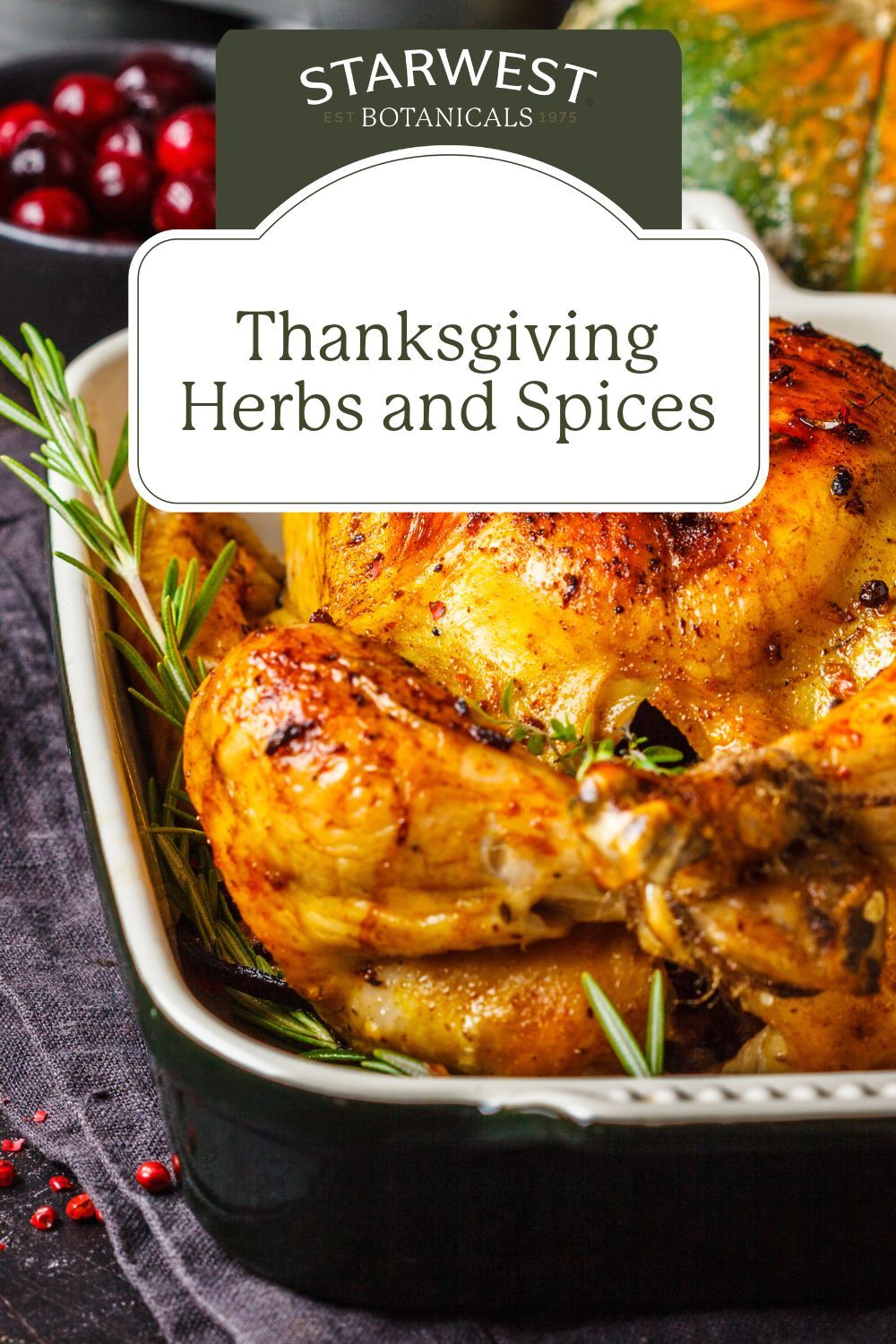
Sage, thyme, and rosemary bring savory flavor to Thanksgiving stuffing, poultry, and roasted vegetables. Cinnamon and nutmeg add warmth to pies, baked fruit, and seasonal drinks.
Whether you're preparing family favorites or trying something new, these five herbs and spices can bring your Thanksgiving menu together. Here's how to choose them, combine them, and put them to good use.
The 5 Essential Thanksgiving Herbs and Spices
Each herb and spice has its own role in Thanksgiving cooking. Some are best suited for savory dishes, while others bring out the sweetness of seasonal ingredients.
|
Herb or Spice |
Flavor |
Best Uses |
|
Sage |
Earthy and savory |
Stuffing, poultry, roasted vegetables |
|
Thyme |
Woodsy and slightly minty |
Potatoes, stuffing, soups |
|
Rosemary |
Bold and pine-like |
Roasted potatoes, root vegetables, poultry |
|
Cinnamon |
Sweet and warming |
Apple desserts, pies, hot beverages |
|
Nutmeg |
Warm and nutty |
Pumpkin pie, sweet potatoes, baked goods |
For savory dishes, sage, thyme, and rosemary make an excellent starting point. For desserts and drinks, cinnamon and nutmeg are a classic pairing.
Make Your Own Thanksgiving Herb Seasoning Blend
A homemade blend of sage, thyme, and rosemary is an easy way to bring consistent flavor to several dishes without measuring each herb every time.
Sage, Thyme & Rosemary Seasoning Blend
Ingredients
2 tablespoons Starwest Organic Rubbed Sage
1 tablespoon Starwest Organic Thyme Leaf Cut and Sifted
1 tablespoon Starwest Organic Whole Rosemary Leaf, lightly crushed
Instructions
Lightly crush the whole rosemary leaves using a mortar and pestle or the back of a spoon.
Combine the rosemary, sage, and thyme in a small bowl.
Mix until the herbs are evenly distributed.
Transfer to a clean, dry, airtight jar and label it with the ingredients and preparation date.
Approximate yield: 4 tablespoons, depending on how finely the herbs are crushed.
Recipe development note: This is a proposed blend. The proportions, final yield, and recommended amounts per dish should be confirmed through kitchen testing before publication.
Why These Herb Forms Work Together
The form of each herb makes a difference in how it blends into your cooking.
Rubbed Sage: Rubbed sage has a light, fluffy texture that makes it easy to distribute through stuffing and dry seasoning mixtures.
Cut and Sifted Thyme: The smaller pieces mix easily with other dried herbs, making thyme a convenient choice for seasoning blends and savory dishes.
Whole Rosemary Leaf: Whole rosemary retains its recognizable needle-like shape. Lightly crushing it before mixing helps distribute its bold flavor more evenly throughout the blend.
Together, these three forms create a versatile seasoning that can be prepared ahead of time and used throughout your Thanksgiving cooking.
3 Ways to Use Your Thanksgiving Herb Blend
Once your seasoning is ready, you can use it across several holiday dishes.
- Classic Thanksgiving Stuffing
Add the herb blend to your favorite stuffing recipe for a combination of earthy sage, aromatic rosemary, and woodsy thyme.
Mix the herbs into the stuffing ingredients before baking so their flavors are distributed throughout the dish.
Kitchen-testing note: Confirm a recommended starting amount for a defined quantity of stuffing before publication.
- Herb-Roasted Vegetables
Potatoes, carrots, Brussels sprouts, and other seasonal vegetables pair beautifully with savory herbs.
Toss your vegetables with olive oil, the seasoning blend, and salt to taste. Spread them on a baking sheet and roast according to your vegetable recipe.
Kitchen-testing note: Confirm a starting amount of seasoning per pound of vegetables and the cooking instructions for the selected vegetable combination.
- Savory Soups and Mushroom Dishes
The same blend can add depth to mushroom-based dishes, vegetable soups, and other savory sides.
Add it during cooking, allowing the dried herbs time to hydrate and release their flavor. Start with a modest amount and adjust after tasting.
Tip: Because rosemary has a particularly bold flavor, you can adjust the blend to suit your preferences.
Cinnamon and Nutmeg for Thanksgiving Desserts
While savory herbs are essential for stuffing and roasted vegetables, cinnamon and nutmeg bring familiar holiday warmth to desserts and seasonal drinks.
Cinnamon: From Apple Pie to Warm Cider
Cinnamon's sweet, woody aroma makes it a natural choice for apple desserts, pumpkin bread, baked pears, and hot beverages.
The form you choose depends on what you're making:
Ground cinnamon: Ideal for pie fillings, cake batters, cookies, and dry spice blends.
Cinnamon sticks: Best for infusing flavor into apple cider, hot chocolate, and simmered fruit. Remove the sticks before serving.
Not sure which cinnamon to choose? Explore our guide to Ceylon Cinnamon vs. Cassia Cinnamon.
Nutmeg: A Little Goes a Long Way
Nutmeg brings a warm, nutty flavor that complements cinnamon in pumpkin pie, sweet potatoes, and other holiday favorites.
Try this simple dry spice combination:
Cinnamon & Nutmeg Baking Blend
2 teaspoons Cnnamon Powder (Ceylon) Organic
1 teaspoon Starwest Organic Nutmeg Powder
Combine the spices and store in a clean, airtight container.
Use small culinary amounts in baked goods or sweet potato dishes, adjusting according to your recipe and taste.
Recipe development note: The blend ratio and recommended quantity per dish should be validated before publication.
Fresh vs. Dried Herbs: Which Is Better for Thanksgiving?
Both fresh and dried herbs have a place in holiday cooking.
Dried herbs are convenient for make-ahead seasoning blends and dishes that cook long enough for the herbs to hydrate and release their flavor.
Fresh herbs can provide a brighter flavor and work well as garnishes or finishing ingredients.
For Thanksgiving meal preparation, dried herbs offer a practical advantage: you can measure, mix, and store your seasoning ahead of time.
If you're substituting fresh herbs for dried ones, remember that flavor intensity varies by herb and form. Follow your recipe's guidance rather than relying on a single conversion for every ingredient.
Your Thanksgiving Spice Prep Checklist
Before the holiday cooking begins, make sure your pantry is ready.
For savory dishes: Sage, thyme, and rosemary
For baking: Cinnamon and nutmeg
For preparation: Measuring spoons, mixing bowls, and clean, airtight jars
For storage: Labels and a cool, dry space away from direct sunlight
Preparing your dry seasoning blends ahead of time means one less task on Thanksgiving Day.
Wondering whether the spices already in your pantry are still at their best? Read our guide to How Long Dried Herbs Last.
Frequently Asked Questions
What herbs are traditionally used in Thanksgiving stuffing?
Sage, thyme, and rosemary are popular choices. Sage provides the familiar savory flavor, while thyme and rosemary add complementary herbal notes.
Can I make Thanksgiving seasoning without salt?
Yes! The sage, thyme, and rosemary blend above contains no added salt. You can season individual dishes separately to control the final flavor.
Can I prepare the herb blend ahead of Thanksgiving?
Yes. Mix the dried herbs and store them in a clean, airtight container away from heat, moisture, and direct sunlight.
Can I substitute thyme for rosemary?
Thyme can be used in place of rosemary if you prefer a milder flavor, although the finished dish will taste different. Adjust the amount to your preference.
Bring More Flavor to Your Thanksgiving Table
From savory stuffing to warm holiday desserts, a few thoughtfully chosen herbs and spices can make your favorite Thanksgiving recipes even more memorable.
With organic sage, thyme, rosemary, cinnamon, and nutmeg from Starwest Botanicals, you'll have the ingredients to prepare classic dishes and experiment with new family favorites.
Explore Starwest Botanicals' organic herbs and spices and get your holiday pantry ready.

